
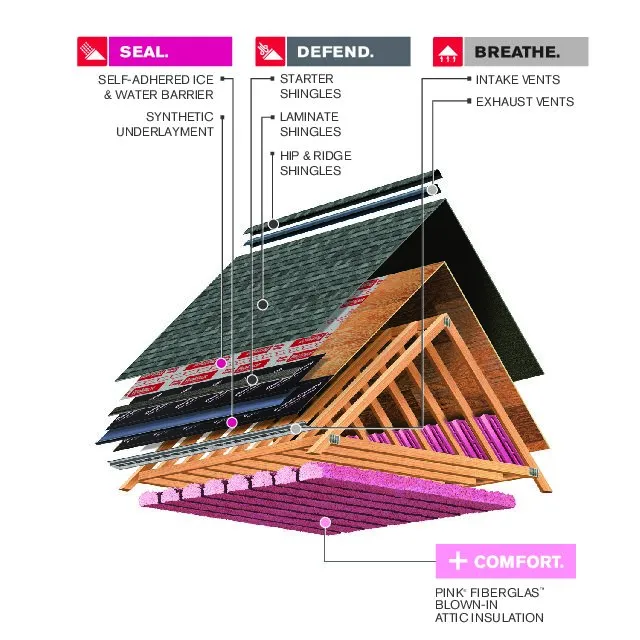
Knowing the components of a shingle roof system makes it much easier to read a roofing quote. A shingle roof is a layered system, and the shingles you see are only the top layer. When a roof leaks or wears out early in Austin, the cause is often one of the parts underneath: an underlayment that gave up in the heat, flashing that was reused, or an attic that can't breathe. Here is every layer, from the wood deck up, and what each one does.
Components of a Shingle Roof System, From the Deck Up
- Roof deck. The plywood or OSB sheets nailed to the rafters. Everything else is fastened to it, so soft or rotted sections are replaced during a re-roof, not covered over.
- Drip edge. A bent metal strip along the eaves and rakes that steers water into the gutters and protects the deck edge.
- Ice and water barrier. A self-adhering membrane for the spots water attacks most: valleys, around chimneys and skylights, and along low edges. In Central Texas it earns its keep in wind-driven rain rather than ice.
- Underlayment. A synthetic sheet across the rest of the deck. It is the backup layer if wind lifts a shingle or water gets under one. Synthetic products hold up to heat and foot traffic better than old felt paper.
- Starter shingles. A first course along the eaves and rakes with a sealant strip. They lock down the first row of shingles, which is where wind usually starts peeling a roof.
- Field shingles. The main shingles. Most Austin homes use laminated architectural shingles; Class 4 impact-resistant versions are worth pricing in hail areas.
- Flashing. Metal that seals the joints where the roof meets walls, chimneys, skylights and pipes. More leaks start at flashing than in the middle of a roof.
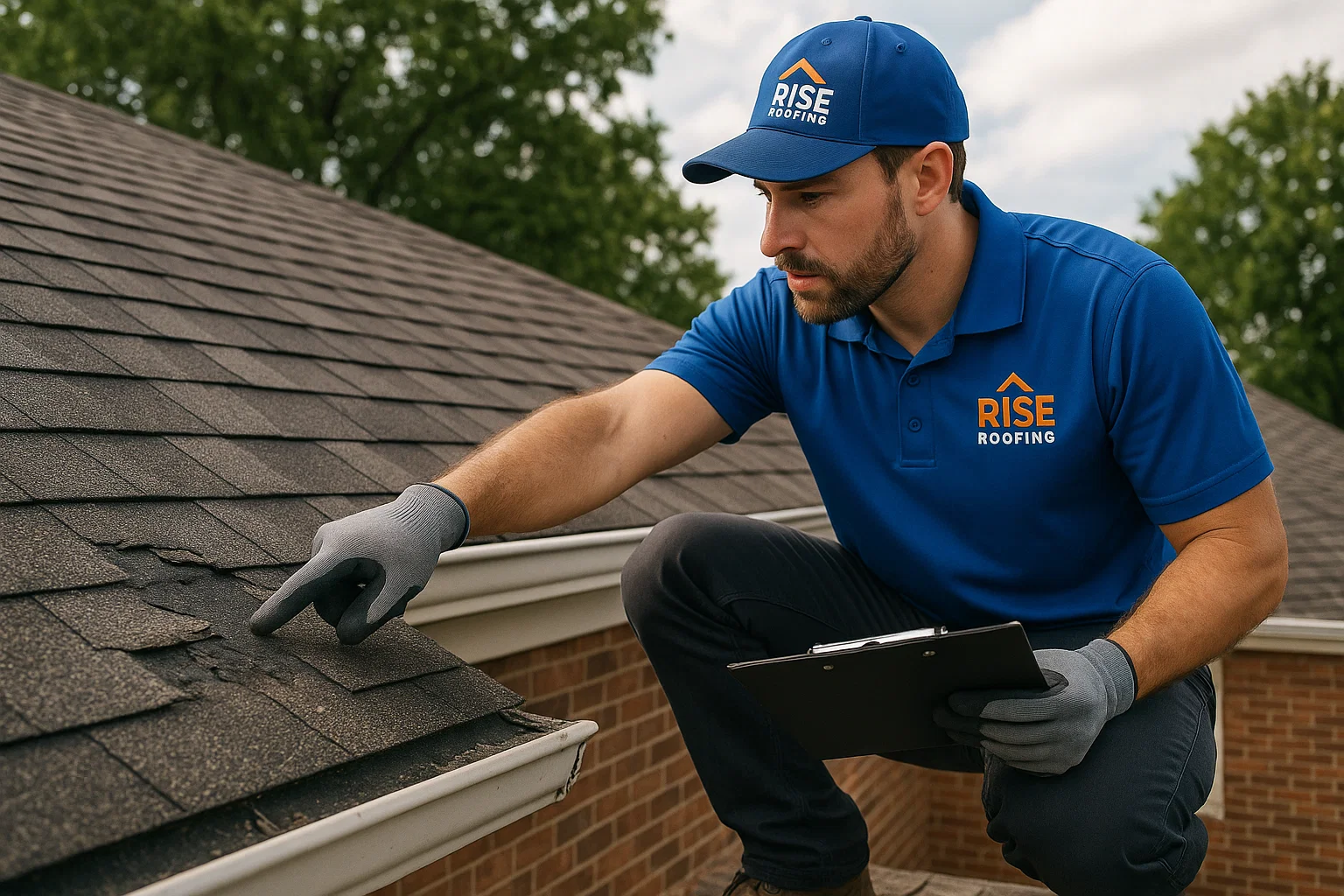
- Pipe boots and vents. Collars around plumbing pipes and the roof vents. Rubber boots dry out and crack in the sun, a common source of small leaks.
- Hip and ridge caps. Thicker, folded shingles that cover the peaks. They take the most wind and sun of any shingle on the roof.
Ventilation: the Part Most People Forget
An attic needs air coming in low (soffit or intake vents) and going out high (a ridge vent or other exhaust). Without that flow, summer heat builds up under the deck, shingles age faster, and the air conditioner works harder. Balanced intake and exhaust is one of the simplest ways to protect a roof in Austin's climate. Attic insulation isn't part of the roof itself, but it works with ventilation to keep that heat out of the living space.
What Tends to Fail First in Central Texas
| Component | What we usually see | Why |
|---|---|---|
| Pipe boots | Cracked rubber, slow leaks | Sun and heat dry the rubber out |
| Flashing | Lifted or rusted metal, failed sealant | Reused on a previous re-roof, or sealant past its life |
| Ridge caps | Cracks and missing pieces | Most exposed to wind and UV |
| Field shingles | Bruises and granule loss | Hail, then years of sun |
| Deck | Soft spots | Long-term leaks or poor ventilation |
Questions to Ask When You Compare Roof Quotes
- Is the old roof torn off, or are shingles laid over it?
- Will damaged decking be replaced, and how is it priced?
- What underlayment and ice and water barrier are included, and where?
- Are starter shingles used on both the eaves and the rakes?
- Is new flashing included, or is the old flashing reused?
- How will the attic be ventilated?
Owens Corning designs these parts to work together as its Total Protection Roofing System, and its strongest warranty tiers require using its components. Our quote comparison checklist goes further, and the shingle assistant helps you pick a color. For an independent primer, see the National Roofing Contractors Association.
Get Every Layer Checked
RISE Roofing is an Owens Corning Certified Installer. A free inspection covers the shingles, flashing, vents, pipe boots and attic, with photos of anything we find, and a written quote within 24 to 48 hours if work is needed. Replacements carry our 10-year workmanship warranty. Book your free inspection or try the roof cost calculator.