
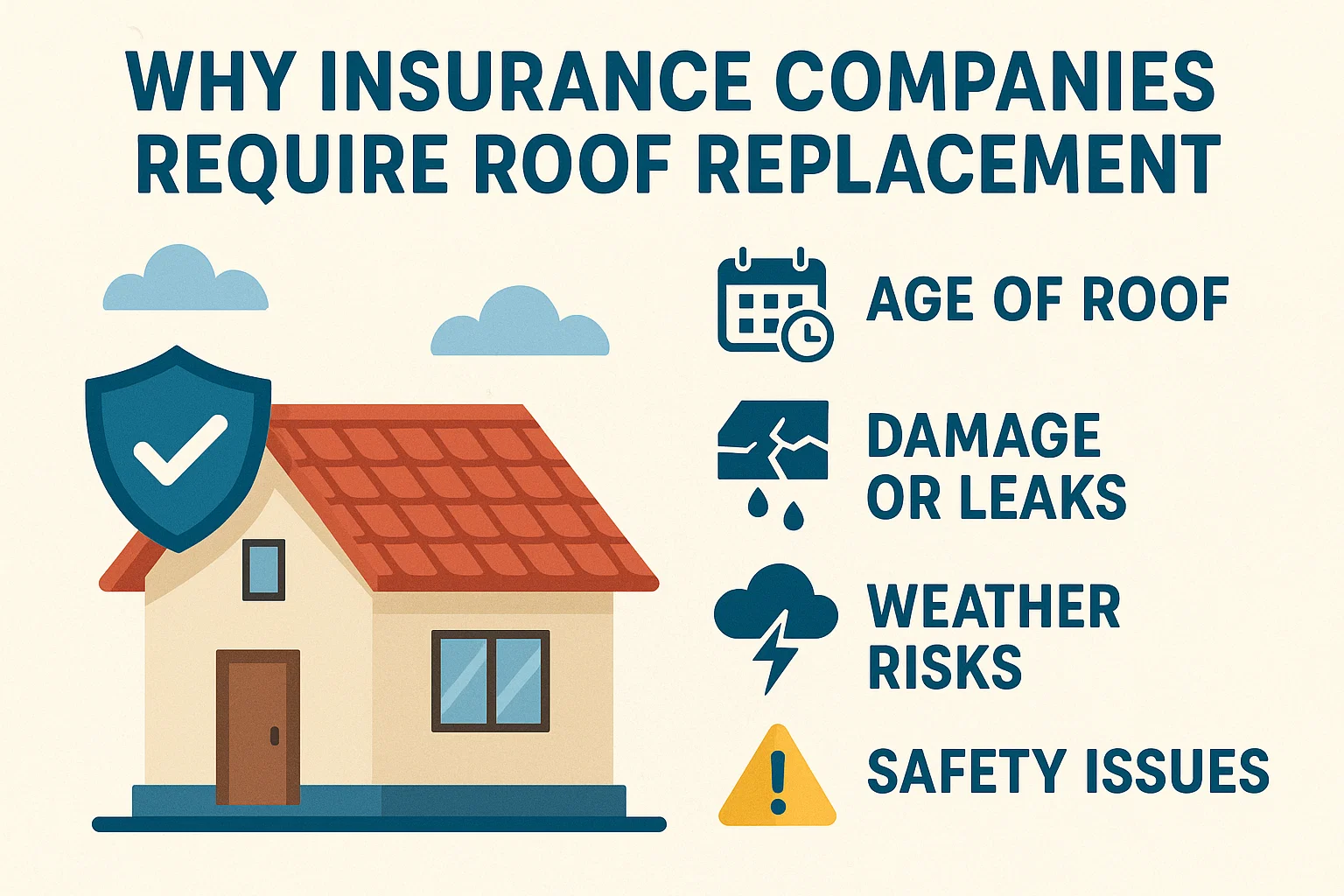
A letter from your insurer saying your roof must be replaced, or your policy won't renew, can feel like an ultimatum. It usually follows a routine underwriting review rather than a claim. Here is why Austin homeowners get these notices, what you can do about one, and how to avoid paying for more roof than you need.
Why Is Your Insurance Requiring a Roof Replacement?
- Age. Many insurers flag older shingle roofs at renewal, even if they don't leak.
- Condition. An exterior inspection, aerial images or drone photos may show worn, missing or damaged shingles.
- Claim history. Past hail or wind claims, especially unrepaired ones, raise the insurer's risk.
- Prior damage that was paid but not fixed. If a claim was paid and the roof wasn't repaired, the insurer may require the work before renewing.
What to Do When the Letter Arrives
- Read it closely. Note the deadline, what exactly the insurer requires (replacement, repair or proof of condition) and who to send documents to.
- Ask for the basis. Request the inspection report or photos behind the decision. You're entitled to understand what they saw.
- Get an independent inspection. A roofer's photos and written condition report tell you whether the roof truly needs replacing or whether repairs would satisfy the insurer.
- Talk to your agent. Ask whether a documented repair, a roof certification or a different policy option would meet their requirement.
- Shop the policy if needed. Different insurers set different rules for older roofs.
- Keep everything in writing, and send proof of completed work before the deadline.
Repair, Replace or Switch Insurers?
| Situation | Often the sensible move |
|---|---|
| Roof is sound but has a few problem spots | Document a repair and send photos to the insurer |
| Roof is near the end of its life anyway | Replace it, and consider Class 4 shingles |
| Insurer won't accept anything but replacement and the roof has years left | Compare other insurers' requirements before deciding |
If You Do Replace
A new roof often improves what you pay for coverage over time. Many Texas insurers offer a premium discount for a Class 4 impact-resistant roof, though each insurer sets its own amount, and we complete the Texas Department of Insurance Form PC068 that documents it. Ask your agent before choosing a shingle.
Your Rights and Where to Get Help
If you think a decision about your policy is unfair or unclear, the Texas Department of Insurance runs a consumer help line and can explain your options. Keep copies of the notice, your inspection report and every reply.
How RISE Roofing Helps
We inspect your roof for free, photograph its condition and give you a written report and quote within 24 to 48 hours, so you and your insurer are working from the same facts. Policy decisions stay between you and your insurer. RISE Roofing is an Owens Corning Certified Installer, and replacements carry our 10-year workmanship warranty. Request your free roof inspection.