
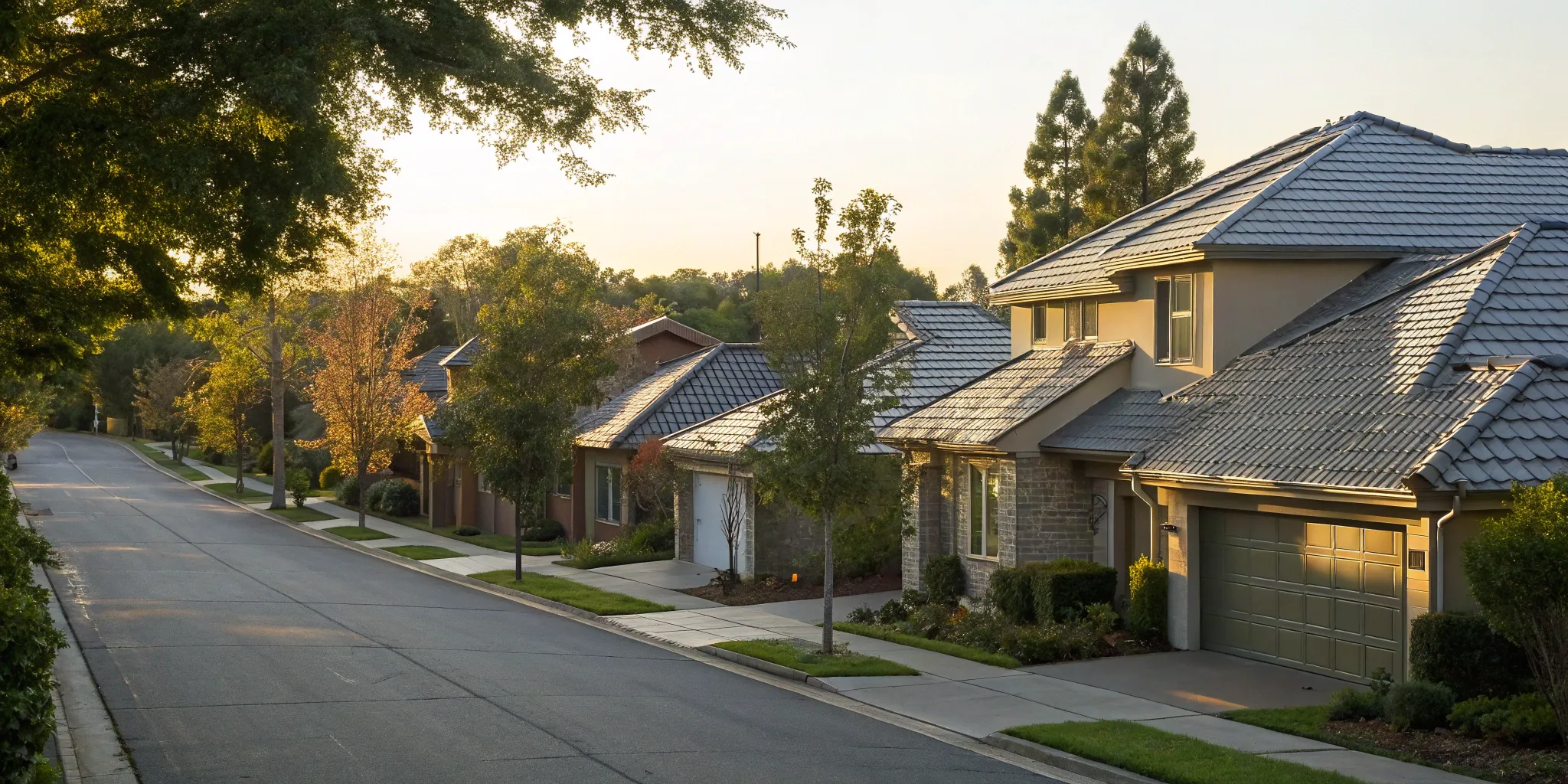
Metal roofing has gained significant market share in the Austin metro, driven by homeowners seeking permanent solutions to Central Texas hail damage. A properly installed standing seam or stone-coated steel system is built to resist hail and high winds — addressing Austin's two primary weather threats in a single installation. Its long service life can break the replacement cycle that shingle roofs face in the hail belt, making metal the lowest total-cost-of-ownership option for Austin properties planning to hold long-term.
Metal Tile Roofing for Central Texas Properties
Metal tile roofing systems — including stone-coated steel profiles from DECRA and Tilcor — have gained significant traction in the Austin metro as homeowners seek permanent protection against Central Texas hailstorms without sacrificing the traditional tile or shake aesthetic. These systems combine a steel substrate (typically 26-gauge) with ceramic-coated stone granule surfaces, creating roofing panels that absorb hail impact energy while maintaining the dimensional appearance of classic clay tile, concrete tile, or wood shake.
For Austin properties where HOA restrictions mandate tile or shake aesthetics, metal tile profiles often satisfy architectural review requirements while delivering a Class 4 impact rating, plus a 120 mph manufacturer wind warranty. As a 2025 DECRA Project of the Year Finalist, RISE Roofing brings specialized metal tile installation expertise to Austin homeowners across Round Rock, Cedar Park, Georgetown, Dripping Springs, and the entire Central Texas region. Current pricing runs $14-$18 per square foot installed — a premium investment that can break the replacement cycle shingle roofs face in Austin's hail environment.
How Much Does a Metal Tile Roof Cost?
Let’s talk about the numbers. A new roof is a significant investment in your home, and it’s important to understand the costs involved. While metal tile roofing has a higher initial price tag than some traditional options, its incredible lifespan and durability offer a different kind of value. Think of it less as a short-term expense and more as a long-term upgrade for your property. We’ll break down the upfront costs, how you save money over time, and the specific factors that will shape your final quote.
Understanding the Upfront Investment
It’s true that the initial cost of a metal tile roof is higher than for materials like asphalt shingles. The final price depends heavily on the specific metal, the style you choose, and the complexity of your roof. While that initial cost might seem high, it’s buying you long-term performance and peace of mind. To get a clearer picture of what this investment might look like for your specific home, you can use a roof cost calculator to explore some initial estimates. This helps you budget accordingly and compare it to other materials.
Long-Term Savings and Return on Investment
Here’s where the story gets interesting. While you pay more at the start, you are paying for a roof built for a long service life, which means fewer replacements down the road. Plus, if you choose a cool-rated color, its finish reflects more of the sun’s heat, which can ease the cooling load on your home in the Texas heat. That combination of longevity and cool-roof performance is where the long-term value of the investment comes from.
Cost Comparison: Metal vs. Traditional Materials
When you place metal tile side-by-side with traditional materials, the long-term value becomes clear. An asphalt shingle roof might be cheaper to install, but it will require more frequent repairs and a full replacement much sooner. Traditional clay tile is far heavier. A metal tile roof requires very little upkeep and stands up to harsh weather. When you factor in the durability and minimal maintenance, the lifetime cost of a metal roof is often much more competitive than it first appears.
What Factors Influence the Price?
RISE Roofing provides complimentary roof assessments across the Austin metro — from Georgetown and Round Rock in the north to Kyle and Buda in the south, and from Lakeway in the west to Pflugerville in the east. Every assessment includes satellite and drone measurements, material recommendations tailored to your property's Central Texas exposure profile, and a fixed-price proposal delivered within 24-48 hours. Call (512) 360-8206 or complete the form to schedule your free evaluation.
Exploring Top Metal Tile Roof Brands
When you’re investing in a new roof, the brand you choose is just as important as the material. With so many options out there, it can be tough to know which ones truly deliver on their promises of durability and style. We’ve spent years working with different products, and through that experience, we’ve identified the manufacturers that consistently provide outstanding quality and performance. These are the brands we trust to protect our clients’ homes and businesses for decades to come.
Choosing the right brand means you’re not just getting a roof; you’re getting a complete system engineered for longevity, weather resistance, and lasting beauty. In this section, we’ll walk you through our preferred metal tile solutions and explain what makes them stand out. We’ll look at their specific styles, the technology behind their durability, and the core benefits that make metal roofing such a smart choice. Our goal is to give you the clarity you need to select a roof you’ll love for years, just like the ones you can see in our recent projects.
Our Preferred Metal Tile Solutions
Austin's roofing costs are driven by three intersecting forces. The metro's construction boom has stretched skilled labor across residential, commercial, and infrastructure projects simultaneously, pushing up labor rates. Material logistics add freight costs compared to Gulf Coast metros. And the near-universal specification of impact-resistant materials (Class 4 rated) adds to base material costs. Some insurers offer a premium discount for qualifying impact-resistant roofs: each Texas insurer sets its own discount and criteria, so ask yours what it offers.
A Look at DECRA Stone-Coated Steel
Metal roofing adoption in the Austin market has accelerated dramatically, driven by homeowners seeking permanent protection against Central Texas hailstorms. A properly engineered metal system — whether standing seam, stone-coated steel, or architectural metal shingle — is built to resist hail impacts and for a long service life. For Austin properties in high-exposure areas along the I-35 corridor, metal roofing can break the replacement cycle that shingle roofs face and may qualify for an insurance premium discount that depends on the carrier and product rating — each Texas insurer sets its own discount and criteria, so ask yours what it offers.
A Look at Tilcor Stone-Coated Steel
Tilcor is DECRA’s sister brand: both are owned by IKO, whose plant in Ennis, Texas makes stone-coated metal roofing in tile, shake and shingle profiles under the DECRA and Tilcor brands. Tilcor’s Spanish-tile-style profile is Antica, which Tilcor describes as an S-tile shape. Other companies sell stone-coated steel too, but RISE Roofing is certified with DECRA and Tilcor and installs every profile both brands make.
The Benefits of Classic Metal Roofing
The reason brands like DECRA and Tilcor are so effective is that they build upon the inherent strengths of metal itself. A quality metal roof is built for a long service life. This longevity comes from the sheer durability of materials like steel, which can handle Central Texas severe weather including hailstorms, microbursts, and 100°F+ summer heat conditions with ease. From heavy rain to intense sun and high winds, a metal roof is built to endure. This long-term performance is a key reason why the initial investment often provides a better return over time, a factor you can explore with our roof cost calculator.
The Tech Behind the Tile: Modern Coatings
Material selection for Austin properties must prioritize three performance metrics that don't apply equally in other Texas markets. First, Class 4 impact resistance (UL 2218 rated) is essential given how often Central Texas sees significant hail. Second, SBS-modified asphalt or thermoplastic formulations maintain flexibility through the region's dramatic daily temperature swings. Third, algae-resistant and UV-stabilized surface treatments extend service life under Austin's intense solar exposure — standard products designed for moderate climates can degrade faster here.
Installation and Maintenance: What to Expect
A metal tile roof is a fantastic long-term investment for your property, but its performance hinges on proper installation and care. Understanding the process from start to finish helps you know what to expect and how to keep your roof in top condition for decades. From finding the right crew to simple annual check-ups, here’s a straightforward look at what’s involved.
Why Professional Installation Is Key
Even with the best materials, a poor installation can lead to leaks, damage, and a shorter lifespan for your roof. Metal tile systems require specific techniques and tools that differ from traditional asphalt shingles. It can be tricky to find roofers who are truly experienced in installing these systems correctly. That’s why choosing a certified contractor with a portfolio of successful metal roofing projects is so important. An expert team ensures every panel is perfectly aligned, fastened, and sealed, giving you a weather-tight roof that performs as designed and protects your home for years to come.
The Installation Process from Start to Finish
One of the great things about metal tile is its efficient installation. Unlike traditional ceramic tiles that are installed one by one, metal tiles often come in large panels. This design makes the installation process much faster, minimizing disruption to your daily life. The process typically begins with preparing the roof deck and installing an underlayment for an extra layer of water protection. Next, the metal tile panels are carefully laid out and securely fastened. The final steps involve installing flashing around chimneys and vents, along with ridge caps, to ensure every part of your roof is sealed and protected from the elements.
Simple Care for a Long-Lasting Roof
Metal tile roofs are celebrated for being incredibly low-maintenance, but they aren’t completely “set it and forget it.” A little care goes a long way in maximizing their lifespan. We recommend a simple visual inspection once or twice a year, especially after a major storm. Look for any debris like leaves or branches that might have collected in the valleys and gently rinse them off with a hose. It’s also a good idea to have a professional roof inspection annually to check for any minor issues, like scuffs in the coating or loose fasteners, before they can become bigger problems.
Common Myths vs. Reality: Noise and Lightning
Two common concerns about metal roofs are noise and lightning strikes—but these are largely myths. Modern metal roofs are installed over a solid roof deck, often with an underlayment, which muffles the sound of rain to a gentle pitter-patter. As for lightning, DECRA says a metal roof is no more likely to attract it than other roofing materials. Plus, most metal roofs have a high fire rating, meaning they are non-combustible and resist spreading flames, adding a layer of safety to your home.
Safety First: Fire Resistance Features
When it comes to protecting your property, a metal tile roof is one of the safest choices you can make. The materials we use are engineered for superior durability and safety. For example, many systems are made from 26-gauge steel with an aluminum-zinc alloy coating. Steel is non-combustible, and when the panels are installed over a fire-resistant underlayment as a Class A-rated assembly, the roof earns a Class A fire rating—the highest possible—meaning it is effective against severe fire exposure. This feature provides invaluable peace of mind, especially for both residential and commercial property owners who prioritize safety.
Is a Metal Tile Roof Right for Your Home?
You’ve learned about the styles, costs, and installation process. Now comes the most important question: Is a metal tile roof the best choice for your property? Making a final decision means weighing how a roof will perform over decades, especially in the face of unpredictable weather. It’s about finding a solution that not only protects your home but also provides long-term value and peace of mind. Let’s walk through the final considerations to help you choose with confidence.
How They Perform in Extreme Weather
Here in Texas, a roof has to be more than just a pretty face—it needs to be tough. Metal tile roofs are engineered to withstand the harshest conditions our climate throws at them. Brands like DECRA and Tilcor design their products to handle everything from hail and heavy rain to storm debris. DECRA, for example, warrants its panels against blow-off in winds up to 120 mph where a manufacturing defect is the cause. They also offer impressive resistance to hail. This level of durability means you can rest easier when the storm clouds roll in.
Understanding Lifespan and Warranty Coverage
One of the most compelling reasons to choose a metal tile roof is its incredible longevity. A metal roof is built to protect your home for the long haul. Long-term manufacturer warranties against manufacturing defects give you an extra layer of security in your investment. A long-lasting roof means fewer replacements, less waste in landfills, and a more sustainable choice for your home.
Cool Roof Technology and Modern Options
In the Texas heat, energy efficiency is a huge deal. Metal tile roofs in cool-rated colors are a fantastic solution for keeping your home cooler. Their finishes reflect more solar radiation, reducing heat build-up in your attic and the strain on your air conditioning system. This “cool roof” technology is a game-changer for comfort. Plus, modern options like stone-coated steel give you the classic look of shingles or tile with all the benefits of metal. You can explore different styles with our Shingle Assistant to see how these innovative materials can match your home’s aesthetic.
Making a Confident Choice for Your Property
Central Texas homeowners face a roofing environment unlike anywhere else in the state. The Austin metro sits in a region where Gulf moisture and dry western air collide to produce supercell thunderstorms capable of generating large hail. Combined with summer temperatures that routinely exceed 100°F and intense UV, Austin roofs endure accelerated aging compared to moderate climates.
Related Articles
Metal Roofing Options That Match Austin Aesthetics
Austin's architectural diversity — from Hill Country limestone ranches to modern downtown builds — demands roofing materials that deliver both performance and style. Stone-coated steel profiles like DECRA Villa Tile and Shake XD replicate the look of clay tile and wood shake while providing the hail resistance that Central Texas weather demands. For Austin neighborhoods with HOA restrictions on roofing aesthetics, these products often satisfy architectural review requirements while delivering Class 4 impact protection.
What Austin Homeowners Should Know About Roofing Costs
Roofing costs in the Austin metro are driven by the region's construction boom, elevated labor demand, and the prevalence of impact-resistant material specifications. For a typical 2,000 sqft Austin home, a quality asphalt shingle replacement runs $8,000-$15,000 depending on material grade, while standing seam metal ranges from $24,000-$32,000. RISE Roofing provides free, detailed estimates with transparent line-item pricing — no hidden fees or post-signing surprises.
Frequently Asked Questions
Is a metal tile roof really worth the higher upfront cost? It’s true that the initial investment is higher than for something like asphalt shingles, but the long-term value is where a metal tile roof truly shines. You’re paying for a system built for a long service life, which means fewer replacements to pay for. When you add in the money you won’t spend on frequent repairs, the lifetime cost is often much more reasonable than it first appears.
Will my roof be loud when it rains? This is one of the most common myths about metal roofing, but you don’t have to worry about your home sounding like a tin can in a storm. Modern metal tile systems are installed over a solid roof deck and underlayment, which effectively insulates against noise.
How does a metal tile roof hold up to Texas weather like hail and severe storms? These roofing systems are specifically engineered for Central Texas severe weather including hailstorms, microbursts, and 100°F+ summer heat, which is why we recommend them for Central Texas areas like Austin. DECRA and Tilcor warrant their panels against blow-off in winds up to 120 mph where a manufacturing defect is the cause, and the panels are incredibly resistant to impact from hail and flying debris. Unlike asphalt shingles that can be torn off, stone-coated steel provides a durable shield that offers real peace of mind during a storm.
Do I have to get that classic Spanish tile look, or are there other styles? While the Spanish barrel tile is a popular look, you have plenty of other options. Metal tile comes in various profiles, including designs that mimic the softer, scalloped look of classic tile or even the appearance of wood shake. With a wide range of colors and finishes available, you can achieve a beautiful, dimensional look that perfectly complements your home’s specific architectural style.
What kind of maintenance does a metal tile roof actually need? One of the best features of a metal tile roof is how little maintenance it requires. We suggest doing a simple visual check once or twice a year, especially after a big storm, just to make sure no branches or leaves have collected in the roof valleys. Other than that, an occasional rinse with a garden hose is usually all that’s needed to keep it looking great.