
A roof rarely fails overnight. It sends signals for months or years first, and the trick is knowing where to look. Below is the checklist our inspectors use on Austin homes, organized by where you can safely check it yourself: from the yard, from the attic, after a storm and by the calendar. None of it requires climbing on the roof, which we don't recommend.
Signs of Roof Replacement You Can Spot From the Yard
- Shingles that curl, cup or lift. Edges that turn up or corners that peel back stop shedding water properly. In Central Texas heat this often shows on the south and west slopes first.
- Bare or dark patches. Shingles are coated with granules that block UV. Where they wear away, the asphalt underneath bakes and cracks faster.
- Missing pieces or exposed nails. One missing shingle after a wind gust can be a repair. Several across the roof usually means the seal strips have aged out.
- A ridge line that dips. A roof that looks wavy or sags between rafters points to a deck or framing problem, which needs a professional look right away.
- Dark streaks or green growth. Algae streaks are mostly cosmetic, but moss holds moisture against the roof and shortens its life in shady spots under live oaks.
What the Attic Tells You
On a sunny afternoon, take a flashlight into the attic and turn it off once you're up there. Pinpoints of daylight through the roof boards mean openings that water can use too. Then look for:
- water stains or dark rings on the underside of the decking or rafters,
- damp or matted insulation, or a musty smell,
- wood that looks soft, delaminated or blackened around vents and chimneys.
Inside the house, new ceiling stains, peeling paint near the top of walls, or a spot that drips only in heavy rain all trace back to the same thing.
After a Hail or Wind Storm
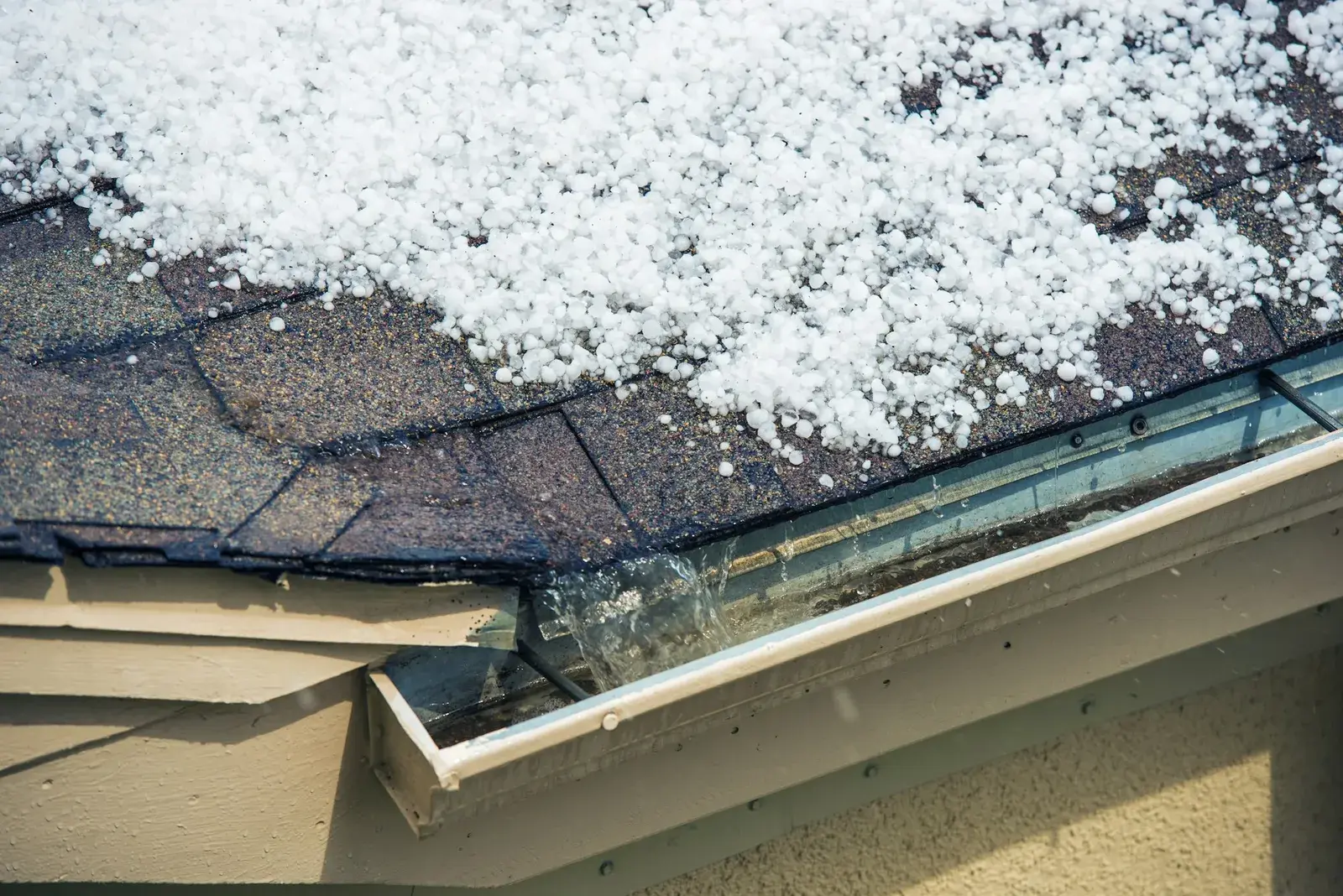
Austin-area hail often leaves damage you can't see from the ground. Signs worth photographing from the yard include granules piled at the bottom of downspouts, dented gutters, metal vents or AC fins, and cracked skylights. Dents on soft metal are a good hint that the shingles took hits too. If you see them, get an inspection before you file anything, and keep your photos with the storm date.
By the Calendar
Asphalt shingle roofs typically last around 20 to 30 years, and the long, hot Texas summers sit at the hard end of that range. If your roof is approaching 20 years, or you don't know its age because you bought the home recently, it's worth a baseline inspection even without symptoms. Two other calendar clues: energy bills creeping up summer after summer can point to ventilation or insulation problems at the roof, and a second layer of shingles laid over an old roof usually means the next job is a full tear-off.
Repair or Replace?
| What we find | Usually |
|---|---|
| A few missing or cracked shingles on an otherwise healthy roof | Repair |
| One leak at a pipe boot, vent or flashing | Repair |
| Granule loss and curling across most slopes | Replace |
| Widespread hail bruising | Replace (and check your insurance) |
| Soft or sagging decking | Replace, including the damaged decking |
| Repeated leaks in different spots | Replace |
What a Free RISE Inspection Covers
We check the shingles, flashing, vents and pipe boots, gutters and the attic, photograph what we find, and tell you plainly whether you need a repair, a replacement or nothing yet. If replacement makes sense, you get a written quote within 24 to 48 hours. RISE Roofing is an Owens Corning Certified Installer, replacements carry our 10-year workmanship warranty, and financing for qualified homeowners is available through Acorn Finance, a third-party lender.
Related reading: what a roof inspection costs, our roof cost calculator and the full Roofing 101 library. Ready for a second opinion? Book your free inspection. The National Roofing Contractors Association also publishes homeowner guidance on roof care and inspections.