What SRI Means for Your Roof
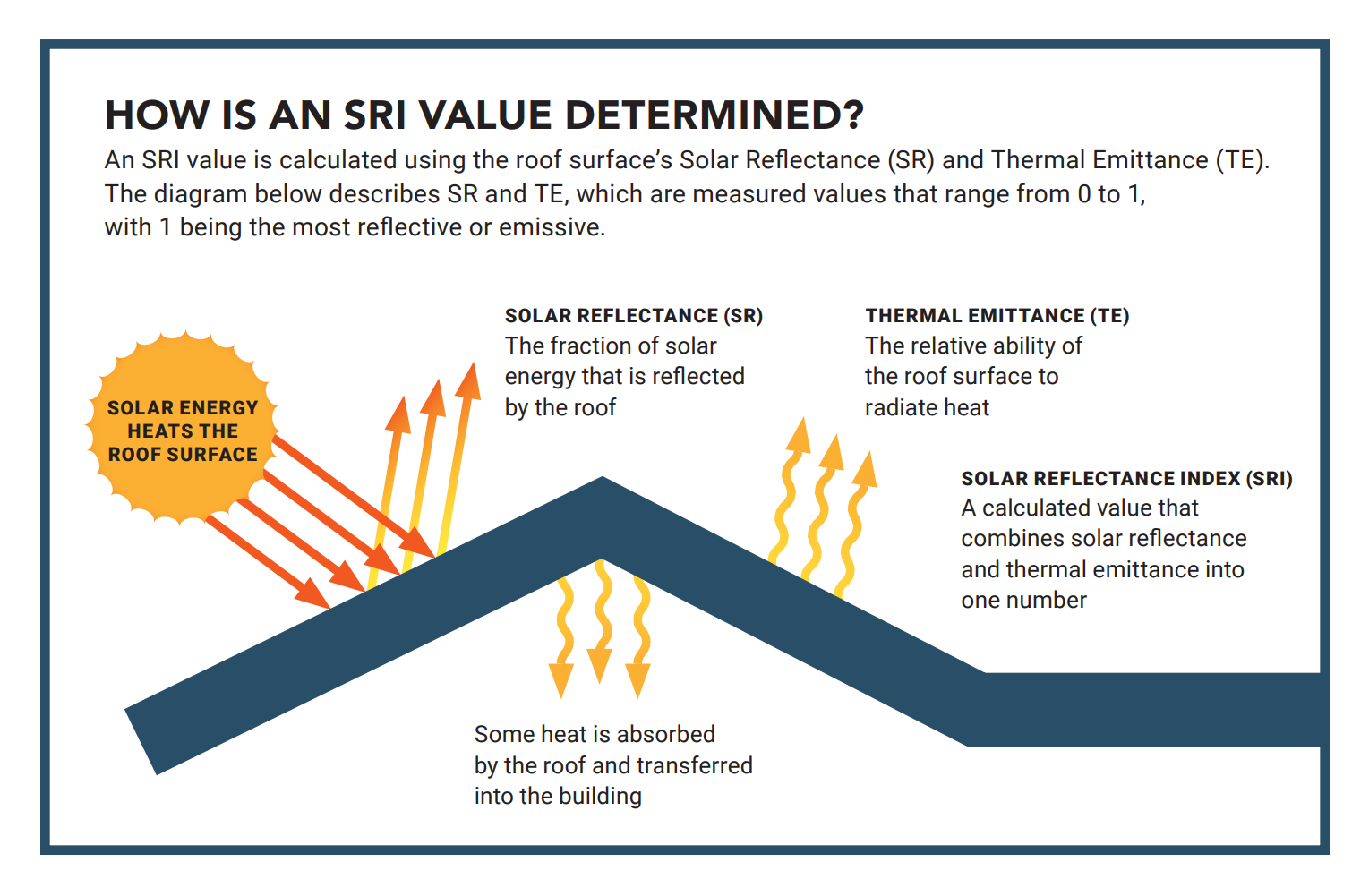
Solar Reflectance Index measures how well a roofing material rejects solar heat on a scale of 0 to 100. A standard black asphalt shingle scores around 20-30. A white TPO membrane scores 80-90. The higher the number, the less heat your roof absorbs and transfers into your building.
In Austin, this isn’t academic. A roof with an SRI of 25 can reach surface temperatures of 170°F on a July afternoon. A roof with an SRI of 78 stays closer to 120°F under the same conditions. That 50-degree difference translates directly to cooling costs — and in a city where AC runs 7 months a year, it adds up fast.
SRI by Roofing Material
White TPO/PVC membrane: SRI 80-90. The top performer. This is why TPO dominates commercial flat roofing in Austin.
Light-colored metal (Galvalume, white Kynar): SRI 60-75. Standing seam metal with a light finish is the best-performing residential option.
Stone-coated steel (light colors): SRI 40-55. The ceramic granules reflect more than standard shingles but less than bare metal.
Architectural shingles (light colors): SRI 25-35. Standard “cool color” shingle options from Owens Corning and Owens Corning improve on dark shingles but still absorb significant heat.
Dark asphalt shingles: SRI 15-25. The worst performer. Common on older Austin homes and the reason many attics hit 160°F.
Why It Matters for Austin Buildings
Energy codes in Austin increasingly reference SRI for commercial roofing. The 2021 IECC requires cool roof materials on low-slope commercial roofs in Climate Zone 2 (which includes Austin). That effectively mandates TPO, PVC, or light-colored metal on any new commercial flat roof.
For residential, there’s no SRI mandate yet. But choosing a higher-SRI material still pays off. We’ve seen customers cut summer cooling bills 15-25% by switching from dark shingles to light-colored standing seam metal. On a $300/month summer electric bill, that’s $45-$75 per month in savings.
The Trade-Off
Higher SRI usually means lighter colors. Not every homeowner wants a white or light gray roof. The good news is that cool-roof technology is improving — Owens Corning now offer “cool color” shingles in medium tones that score SRI 25-35 instead of the typical 15-20 for dark shingles. Not as good as metal, but a meaningful improvement.
Want to know the SRI of your current roof or compare options? Contact us and we’ll walk through the numbers for your specific situation.