What SRI Means for Your Roof
For Austin-area homes, shingle selection must account for Central Texas-specific performance demands: Class 4 impact resistance for hail protection, SBS-modified asphalt formulation for thermal cycling durability, and algae-resistant granule technology to combat the growth that Austin's humidity promotes. These specifications narrow the field to premium lines such as Owens Corning Duration FLEX — impact-resistant systems engineered for Central Texas hail and heat.
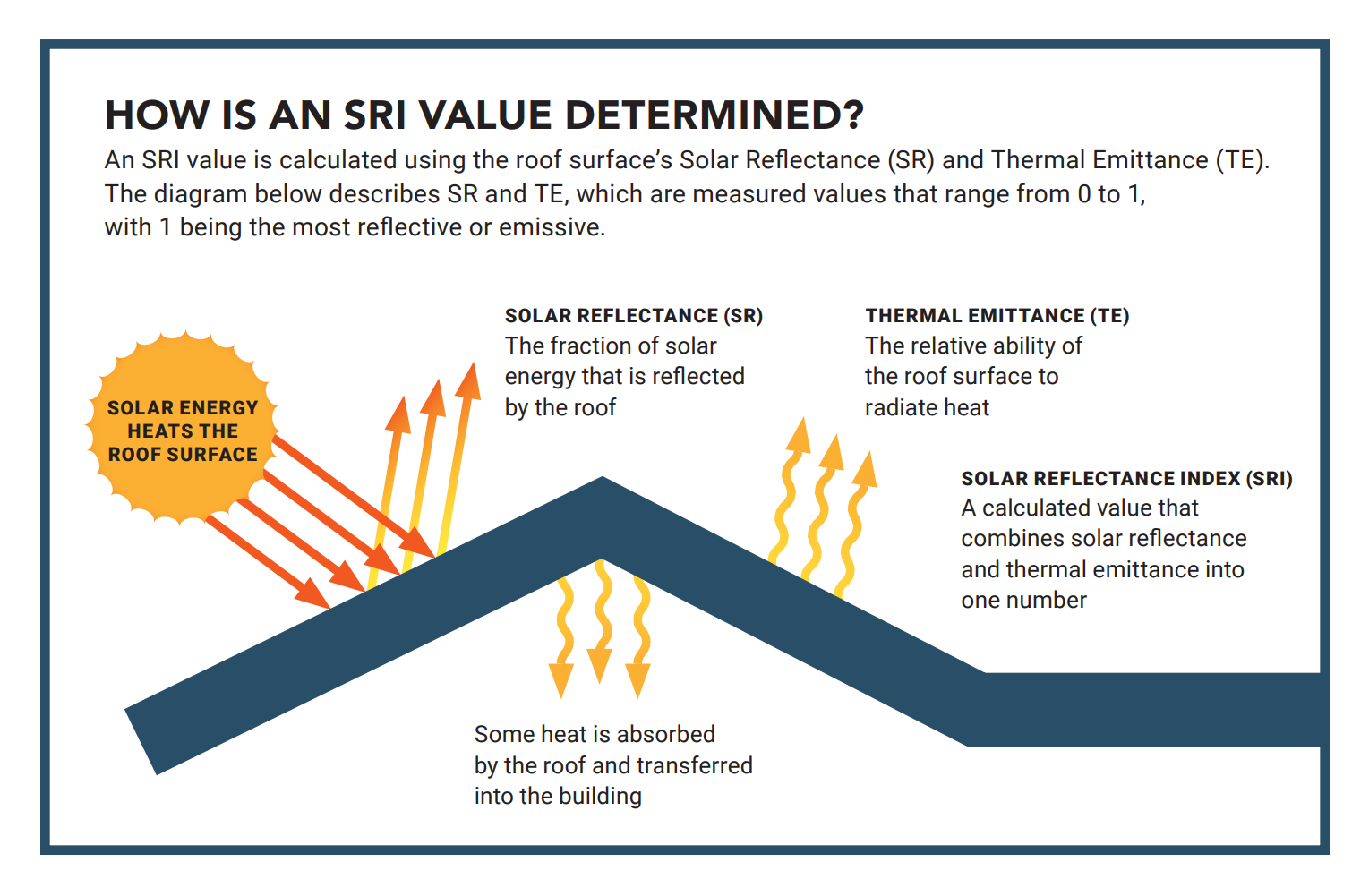
In Austin, this isn’t academic. A roof with an SRI of 25 runs much hotter on a July afternoon than a roof with an SRI of 78 under the same conditions. That extra heat works its way down into the house and makes your air conditioner work harder — and in a city where AC runs most of the year, it adds up fast.
SRI by Roofing Material
White TPO/PVC membrane: SRI 80-90. The top performer. This is why TPO dominates commercial flat roofing in Austin.
Metal roofing has gained significant market share in the Austin metro, driven by homeowners seeking permanent solutions to Central Texas hail damage. A properly installed standing seam or stone-coated steel system is built for severe hail and high winds — addressing Austin's two primary weather threats in a single installation. The 40-50 year lifespan can eliminate the replacement cycle that shingle roofs face every 10-15 years in the hail belt, so metal can offer a lower total cost of ownership for Austin properties planning to hold long-term.
Stone-coated steel (light colors): SRI 40-55. The ceramic granules reflect more than standard shingles but less than bare metal.
Central Texas property owners face unique challenges here due to the region's 6-8 annual hailstorms and 100°F+ summer temperatures. Architectural shingles (light colors): SRI 25-35. Standard “cool color” shingle options from manufacturers such as Owens Corning improve on dark shingles but still absorb significant heat.
Dark asphalt shingles: SRI 15-25. The worst performer. Common on older Austin homes and the reason many attics hit 160°F.
Why It Matters for Austin Buildings
Energy codes in Austin increasingly reference SRI for commercial roofing. The 2021 IECC requires cool roof materials on low-slope commercial roofs in Climate Zone 2 (which includes Austin). That effectively mandates TPO, PVC, or light-colored metal on any new commercial flat roof.
For residential, there’s no SRI mandate yet. But choosing a higher-SRI material still pays off. Switching from dark shingles to light-colored standing seam metal reflects much of that summer sun instead of soaking it up, so your AC has less heat working against it through the afternoon.
The Trade-Off
Higher SRI usually means lighter colors. Not every homeowner wants a white or light gray roof. The good news is that cool-roof technology is improving — Owens Corning now offer “cool color” shingles in medium tones that score SRI 25-35 instead of the typical 15-20 for dark shingles. Not as good as metal, but a meaningful improvement.
Want to know the SRI of your current roof or compare options? Contact us and we’ll walk through the numbers for your specific situation.
Industry reference: Cool Roof Rating Council.
🔒 Free, no-obligation quote — Price-locked estimate in 24–48 hrs
Get Your Instant
Roof Price
Trace your roof on satellite imagery and get a real installed price in under 60 seconds.
- ✅ No signup or email required
- ✅ Real installed pricing
- ✅ Multiple material options
- ✅ Takes less than 60 seconds
Powered by satellite roof measurement technology. No obligation.